


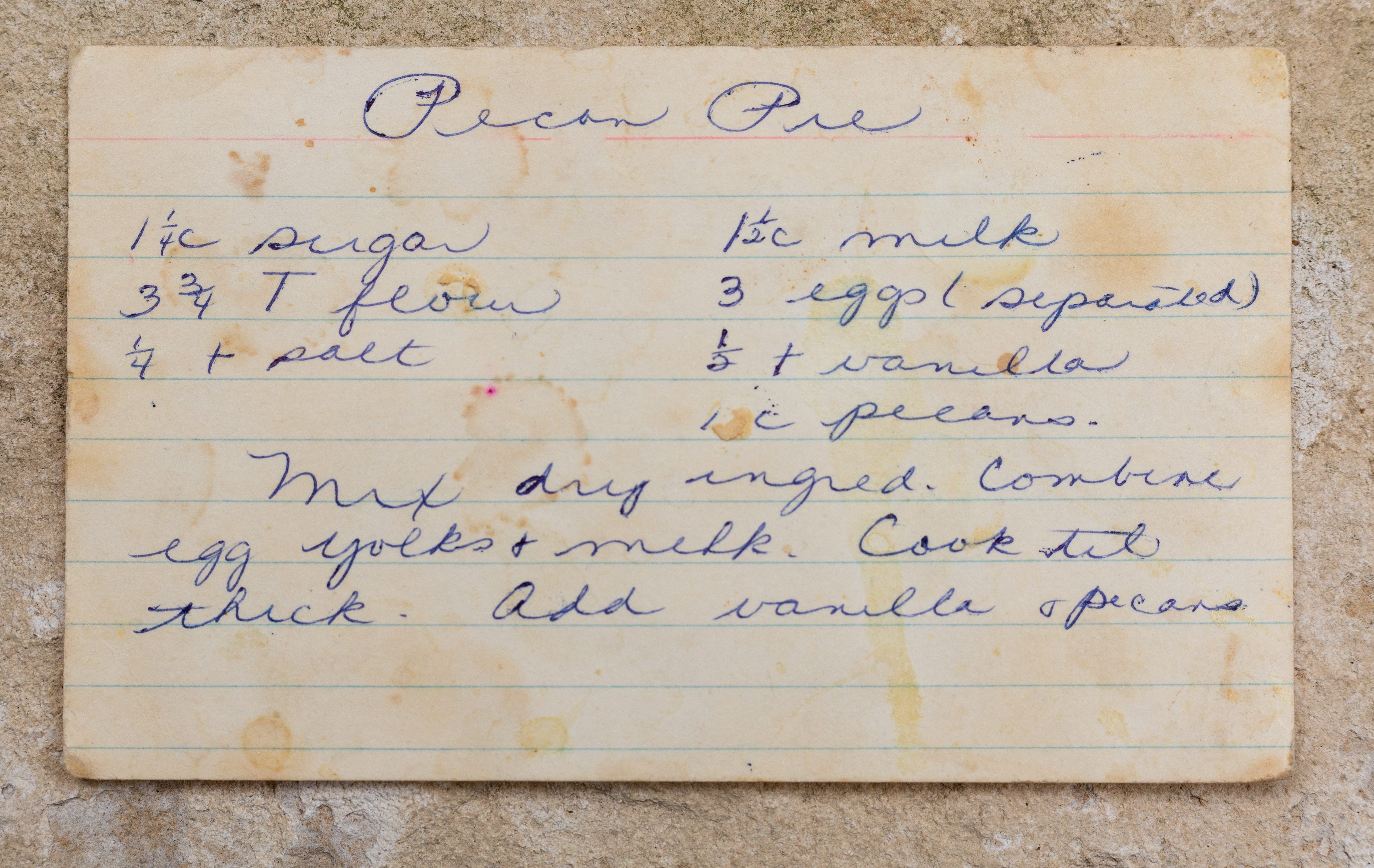
A lot of families have one. It’s a recipe card, stained and soft at the corners, written in a grandmother’s hand. Nobody in the family tries to improve it. You don’t swap out the buttermilk because you think you know better. You make it the way she wrote it, because the card is how what she knew got passed down to you.
Paul asked the Thessalonians to treat his teaching about the same way.
Yesterday we looked at 2 Thessalonians 2:13-14, where Paul reminded a frightened church that God had loved them, chosen them, and called them through the gospel to share in the glory of Jesus. Then he moved straight to what they should do with that.
So then, brothers and sisters, stand firm and hold to the traditions you were taught, whether by what we said or what we wrote. May our Lord Jesus Christ himself and God our Father, who has loved us and given us eternal encouragement and good hope by grace, encourage your hearts and strengthen you in every good work and word, 2 Thessalonians 2:15-17.
Stand Firm
The Thessalonians had been shaken. That’s Paul’s word in 2:2, where he asks them not to be easily upset in mind. Someone had told them the day of the Lord had already come, and the rumor had them rattled.
So Paul tells them to stand firm. He used the same word in his first letter, when Timothy brought back good news about them: For now we live, if you stand firm in the Lord, 1 Thessalonians 3:8. It’s the picture of someone planting their feet and holding their ground while things push against them.
And Paul gives them something to stand on. It’s something they already had: what they’d been taught.
What You Were Taught
Hold to the traditions. The word hold means to grab something and keep a firm grip on it. And traditions means what’s been handed over from one person to the next.
That word makes some of us a little nervous, and for good reason. Jesus had hard words for the Pharisees about tradition: Abandoning the command of God, you hold on to human tradition, Mark 7:8. Their traditions were rules men had stacked on top of God’s law, and over time the rules pushed the law aside. Churches have done the same thing many times since.
The tradition Paul means came from somewhere else. When he uses this word, he’s talking about the message God gave the apostles to hand on to the church. Look at how he introduces the Lord’s Supper to the Corinthians: For I received from the Lord what I also passed on to you, 1 Corinthians 11:23. He describes the gospel the same way: For I passed on to you as most important what I also received, 1 Corinthians 15:3. Paul received the message from Christ and delivered it intact. He wasn’t free to edit it, and neither was anyone else.
The Thessalonians understood that from the start. Paul thanked God that when they heard his preaching, you welcomed it not as a human message, but as it truly is, the word of God, 1 Thessalonians 2:13. They knew whose word they were holding.
That’s why this tradition carries authority. A few verses later, Paul commands the church in the name of our Lord Jesus Christ to keep away from anyone who does not live according to the tradition received from us, 2 Thessalonians 3:6. He even says, If anyone does not obey our instruction in this letter, take note of that person, 3:14. Apostolic teaching was the Lord’s word to his church, and the church was expected to obey it.
Paul also puts what we said and what we wrote on the same level. While he was in Thessalonica, he taught them face to face. After he left, he wrote to them. It was the same message with the same authority either way. Some have read this verse as support for church traditions handed down alongside Scripture. Paul’s test is the source, though. A tradition binds us only if it came from the apostles, and the only place we can hear the apostles today is in what they wrote. Jude calls it the faith that was delivered to the saints once for all, Jude 3. The New Testament is that faith in written form, and it’s what we stand on.
That’s why the recipe card matters. When your faith gets shaken, by a rumor or a hard season, you don’t need something new. You need to go back to what God already handed you and grip it tighter.
Paul’s Prayer
Then Paul stops giving instructions and starts praying.
Standing firm takes effort, and Paul doesn’t pretend otherwise. But he knows where the strength comes from. He prays to the Father and the Son, who has loved us and given us eternal encouragement and good hope by grace. Both of those verbs point back to something God has already done. He loved us at the cross. He gave us encouragement that doesn’t run out and a hope worth having, and he did it by grace.
Now look at what Paul asks God to do. Encourage your hearts and strengthen you. That word strengthen means to set something firmly in place so it won’t wobble. Paul uses it again a few verses later: But the Lord is faithful; he will strengthen and guard you from the evil one, 2 Thessalonians 3:3.
So Paul tells them to stand firm, and then he asks God to be the one who holds them steady. We plant our feet, and God keeps them planted.
And notice where that strength shows up: in every good work and word. Paul’s prayer reaches into ordinary days, into what you do and what you say. The kind word to a coworker counts. So does keeping your temper in traffic.
Holding On This Week
What’s been shaking you lately? Has it pulled you away from what God has already told you? When was the last time you sat down with Scripture just to remind yourself what’s true? And who in your life could use the prayer Paul prayed here?
You don’t have to hold on by yourself. The God who loved you and called you is the one who strengthens your heart.

From Fear to Faith | fromfearto.faith