



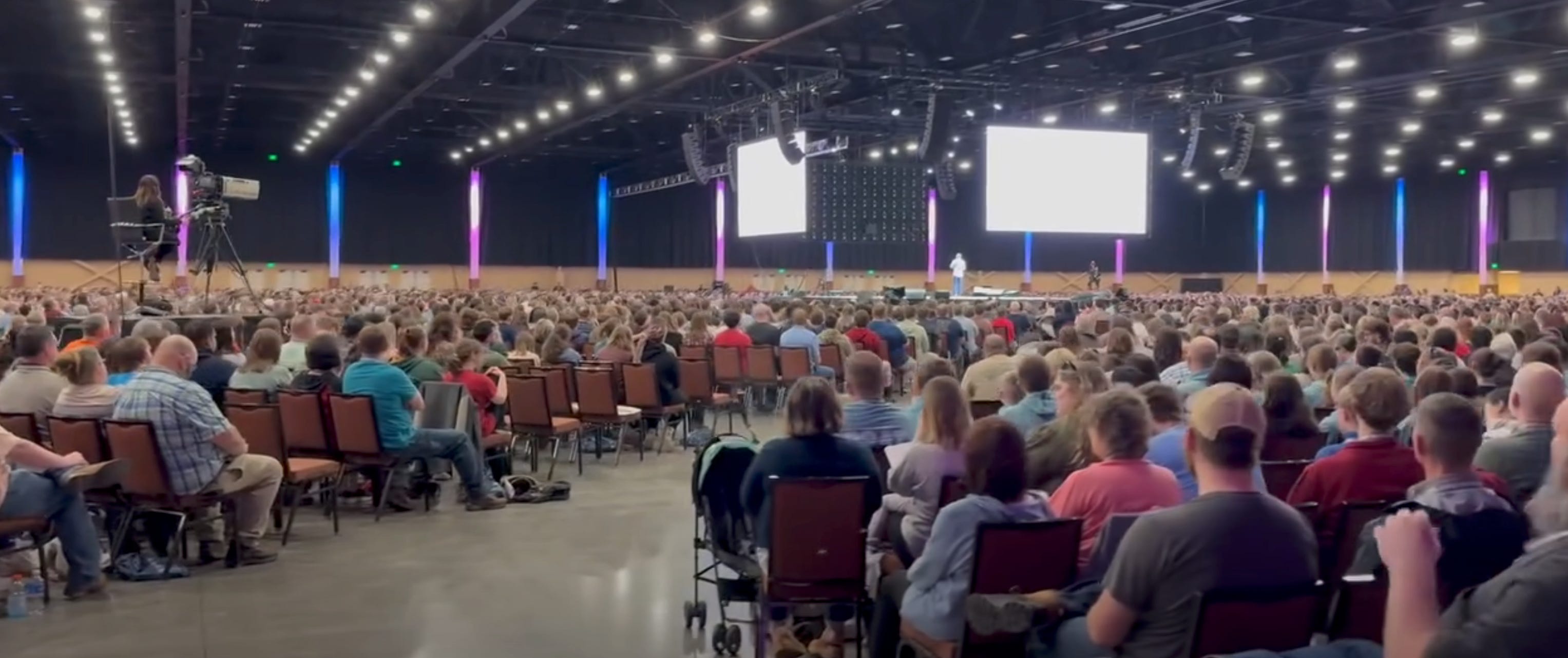
This past weekend, I sat in a room with over 13,000 Christians.
Thirteen thousand. Christians from all over the country packed into the LeConte Center in Pigeon Forge, Tennessee, for the Challenge Youth Conference, which many consider the largest single gathering of Christians in one location on the planet at any given time. Our congregation has made this trip for five years running now, and every single time, I leave different than I arrived.
This year’s theme was ChatCYC: Hearing God in a Digital Age. I think it is one of the best and most relevant themes they’ve done to date. It is so needed, not only for teens, but for all of us who are addicted to our phones. Sunday’s worship service was powerful as Dr. David Shannon preached one of the best lessons I’ve ever heard on guarding your heart.
The Machine That Learned to Think
Shannon opened with a history lesson. A brief one. But it took me down memory lane.
He took us back to 1995. That’s the year a computer beat the world’s best chess player for the first time. Most people shrugged it off. It’s just a game, right? Then came the Jeopardy episode — you probably remember it — where IBM’s Watson sat across from Ken Jennings and Brad Rutter, the two greatest contestants in the show’s history. Jennings held the longest winning streak ever — 74 consecutive wins. Rutter was the highest earner the show had ever produced. Between the two of them, they were the best human minds to ever sit behind that podium. But by the end of that episode, Watson didn’t just win. It wasn’t even close.
Something shifted in those moments. Machines started learning. And they haven’t stopped.
Fast forward to today. Every single minute of your life, something is watching. Your phone knows your sleep patterns. Your apps know your health habits. The ads that pop up on your screen? They’re not random. Somewhere, a machine has been quietly studying you — how long you pause on a post, what music you reach for when you’re sad, which shows you binge at 11 o’clock at night when nobody’s looking.
The algorithm knows you.
We Are Not Victims
Dr. Shannon said something that stuck in my mind the rest of the day. He said the algorithm isn’t something that happens to us. We’re not victims of it.
The algorithm is a reflection of us.
Think about that. The machine isn’t creating your appetites — it’s feeding them. It’s serving up exactly what your heart has been quietly asking for, one click at a time. Every choice you make online is a data point. And over time, all those data points paint a picture. A pretty accurate one.
Solomon said it this way: Guard your heart above all else, for everything you do flows from it (Proverbs 4:23). He wrote that three thousand years before the internet existed. But he already understood something we’re still struggling to accept — that what’s inside us eventually shows up on the outside. Your digital life isn’t separate from your spiritual life. It is your spiritual life, just with a screen on it.
And Proverbs 3:5 cuts even deeper: Trust in the Lord with all your heart and lean not on your own understanding. Here’s what I’ve been chewing on over the last 18 hours or so — many of us say we trust God, but our online behavior tells a different story. What we consume in secret reveals what we actually believe. Not what we say we believe. What we actually believe.
The Secret That Isn’t
I’ve counseled enough people over the years to know this: we almost always think our private choices stay private. The late-night scroll. The content we’d never want our spouse to see. The rabbit holes we go down when the house gets quiet.
But secrets have a way of surfacing. What starts as a private habit rarely stays contained. It spills into our marriages, our parenting, our friendships — sometimes in ways we never see coming. I’ve watched it happen more times than I can count. A man loses his family not because of one dramatic moment, but because of a thousand small compromises that nobody saw. Until everybody did.
God sees it all, of course. He always has. But increasingly, so does the machine.
A Challenge and a Hope
So here’s where I am this morning.
I’m not writing this to shame anybody. I know we’re all navigating this together. None of us grew up with a roadmap for the digital age, and the rules keep changing faster than we can keep up. But I do think it’s time for a gut-check.
Spend some time this week asking yourself an honest question: If someone could see everything I’ve looked at online this past month — every search, every video, every post I lingered on — would it reflect the heart of someone who trusts God?
That question isn’t meant to bury you. It’s meant to free you.
Because here’s the good news. The same God who sees every secret moment also offers fresh starts. He’s not waiting to catch you — He’s waiting to restore you. His mercies really are new every morning (Lamentations 3:23).
And Paul gives us the roadmap in Ephesians 4:22-24. He says to put off your old self, which belongs to your former manner of life and is corrupt through deceitful desires, and to be renewed in the spirit of your minds, and to put on the new self, created after the likeness of God in true righteousness and holiness.
I love that phrase — renewed in the spirit of your minds. That’s not a one-time moment. That’s a daily decision. Every morning you wake up, you get to choose what you feed your mind. You get to choose what you let in. The algorithm will keep doing what it does — watching, learning, serving up more of the same. But you don’t have to keep ordering off that menu.
The old self clicks without thinking. The new self pauses and asks — does this belong in the life I’m trying to live?
That’s the work. It’s not glamorous. But it’s the most important work any of us will do this week.
The algorithm reflects your heart. But the gospel can change your heart.
And that changes everything.

Excellent thoughts! Thanks for sharing Matt!