


Nobody likes to talk about God’s discipline.
We’d rather stay with the mercy. The provision. The patience. And those things are real. Genuinely and abundantly real. But if we only ever talk about God’s patience and skip past what happens in Numbers 21, we end up with a version of God that’s softer than the actual one. And, really, one that is less trustworthy.
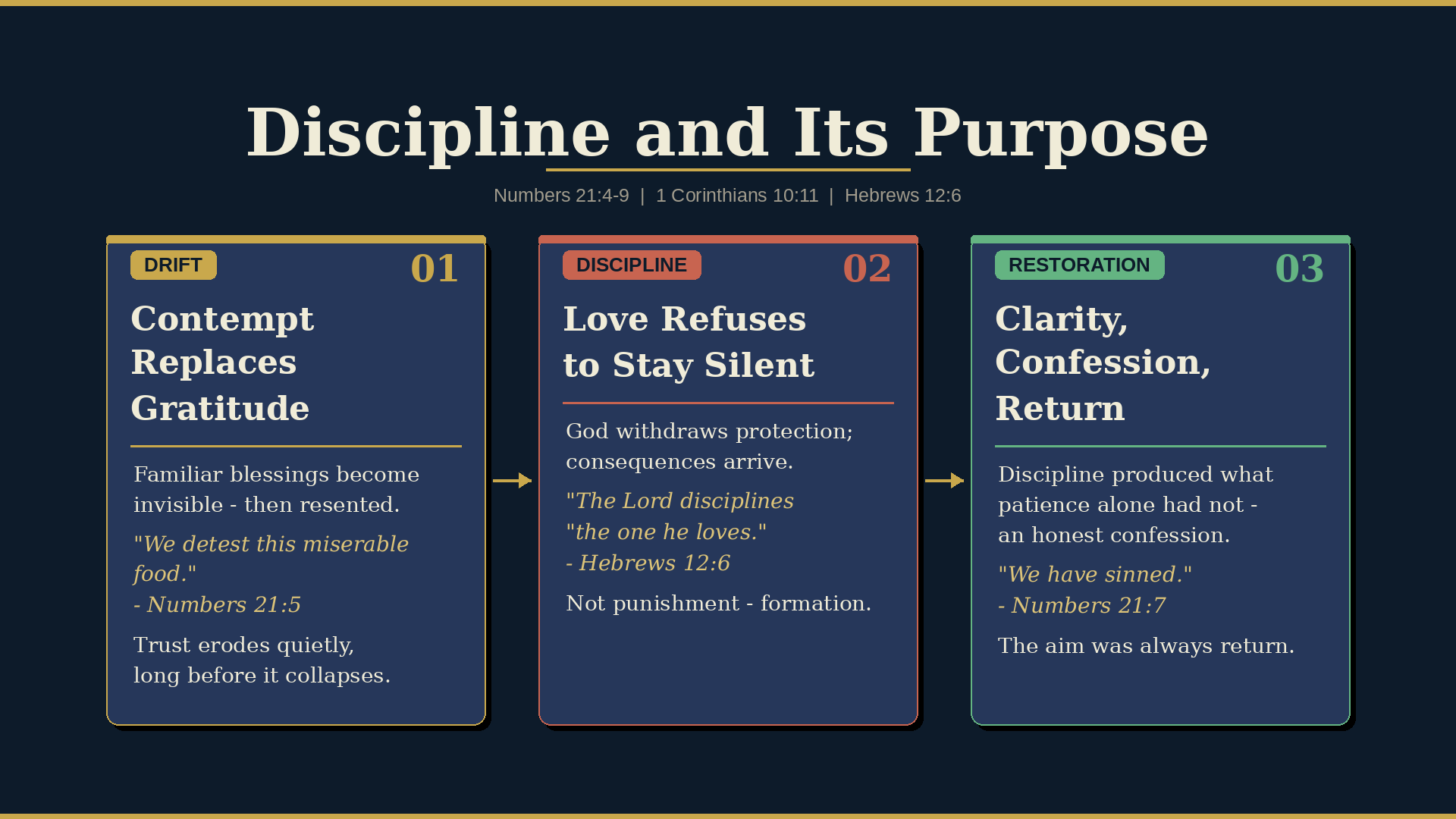
Here’s what happened. Israel was in the wilderness — again — grumbling — again. The road was hard, the journey felt endless, and the manna they’d been eating for decades had worn out its welcome. “We detest this miserable food.” That’s not a mere frustration or grumpiness. That’s contempt. They weren’t crying out to God in honest desperation. They were dismissing Him. Despising what He’d faithfully given them day after day after day.
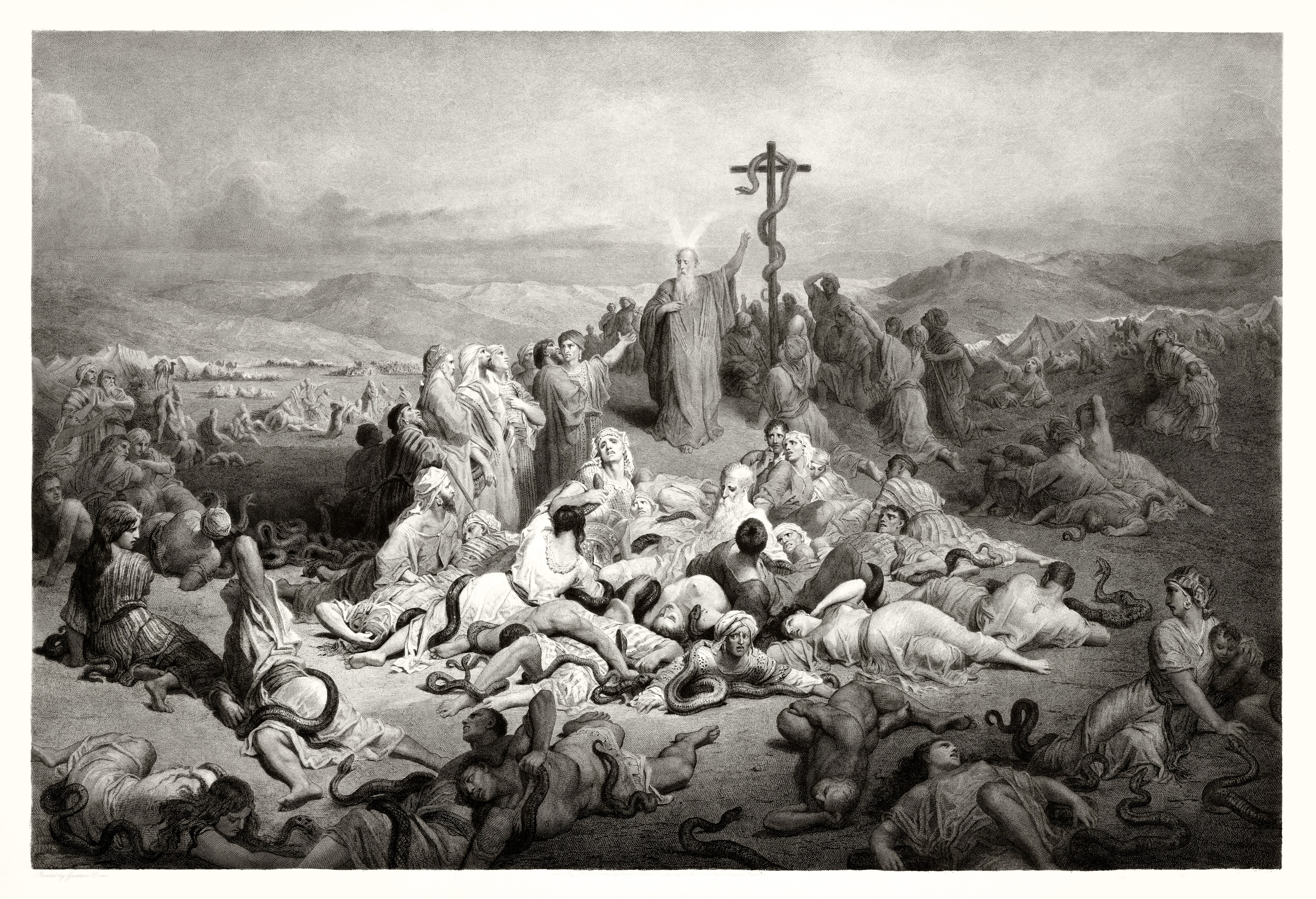
And God let the consequences come.
Venomous snakes. People dying. The text doesn’t soften it, and we shouldn’t either. This was real judgment. It was painful, immediate, and exactly proportional to what Israel had done. They had rejected God’s care. He withdrew His protection. And the wilderness, which had always been dangerous, became dangerous.
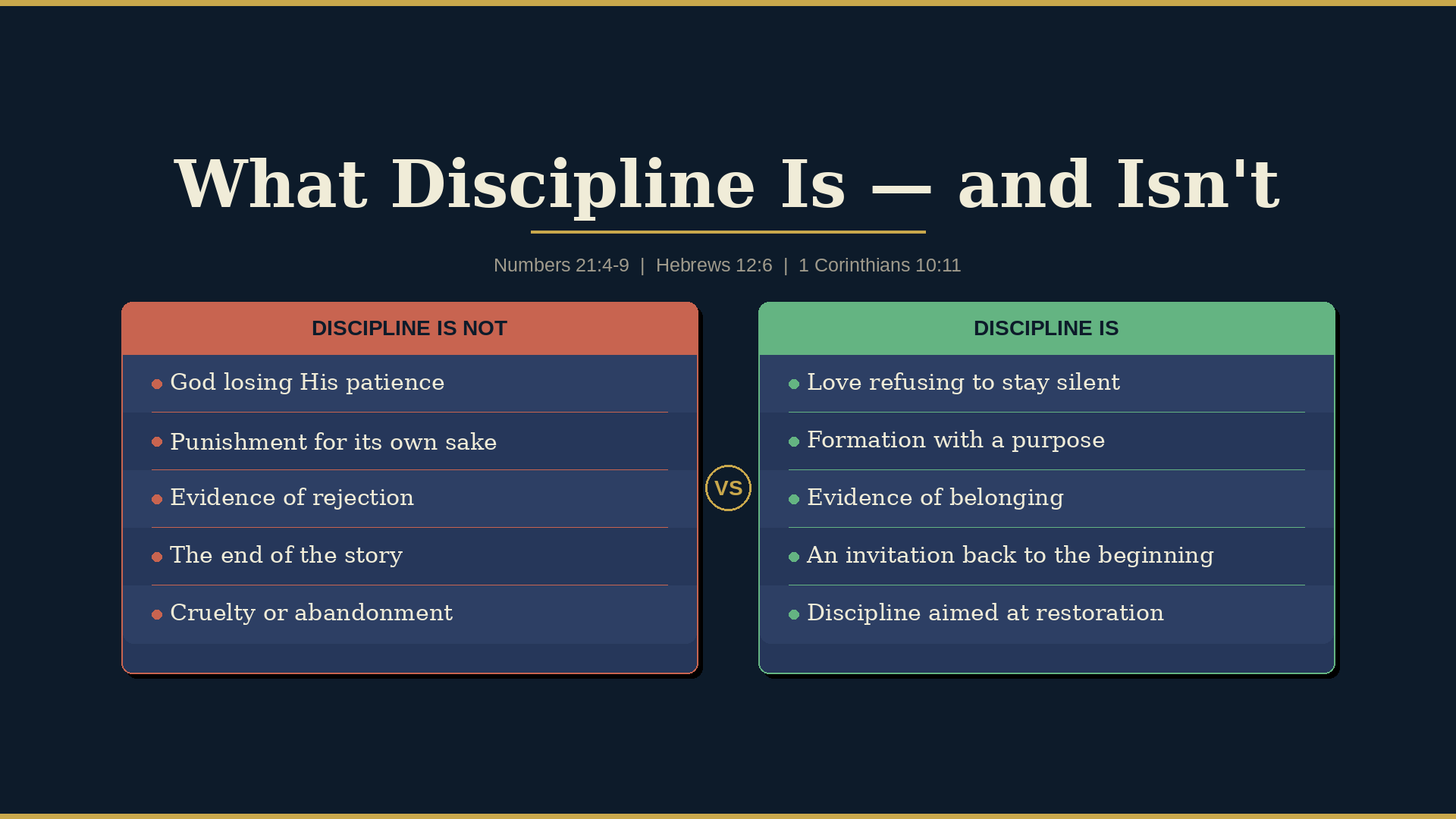
But here’s what I want you to see: this wasn’t God losing His temper. This was God refusing to abandon His people to their own drift.
Paul makes a point we need to see in 1 Corinthians 10 as he’s writing to the church in Corinth — people who are struggling with idolatry, immorality, and an alarming casualness about sin. He reaches all the way back to the wilderness to make his case. He lists Israel’s failures one by one. The grumbling. The testing of God. The rebellion. And then he says: These things happened to them as examples, and they were written for our instruction. (1 Corinthians 10:11)
He’s not telling this story to shame Israel. He’s telling it because he loves the Corinthians, and because he knows what happens when God’s people treat grace as a license to drift. The wilderness is a warning written down and preserved precisely because God doesn’t want His people to need to learn this the hard way.
That’s what discipline is. It’s not punishment for its own sake. It’s a father who loves too much to stay quiet.
Hebrews 12 tells us: The Lord disciplines the one he loves. Not the one he’s given up on. Not the one he’s decided to make an example of. The one he loves. Discipline is relational. It assumes a relationship worth protecting. God doesn’t correct strangers; He corrects sons and daughters who are heading somewhere they shouldn’t go.
And look at what discipline accomplished in Numbers 21 that all the provision and patience hadn’t recently produced: an honest confession. We have sinned. Three words. No excuses. No reframing. Just clarity — the kind of clarity that only comes when the fog of comfortable drift gets burned away.
That’s the aim of discipline. Not destruction. Not humiliation. Clarity. Return. Restored relationship.
Moses prays immediately. God responds. A means of healing is provided. The story moves forward. Because that was always the point, not to end the journey, but to get Israel back on it. Facing the right direction. Eyes open. Trust renewed.
God is patient with His people, genuinely, remarkably patient. But His patience is never indifference. He cares too much about where we’re headed to simply watch us drift without responding. When discipline comes, in whatever form it takes, it’s worth asking the question Israel eventually asked: What is this telling me about where my trust has actually been?
The snakes weren’t the end of the story. They were an invitation back to the beginning of it, back to dependence, honesty, and a God who was never finished with His people.
He still isn’t.
