


We are eight weeks in to my Wednesday night study at Cornerstone. I have really enjoyed teaching God in the Wilderness. Last night we covered what happened when the people rejected God after the unfaithful report of the ten spies. Here, we see God’s mercy and discipline happening at the same time.
___________________________________
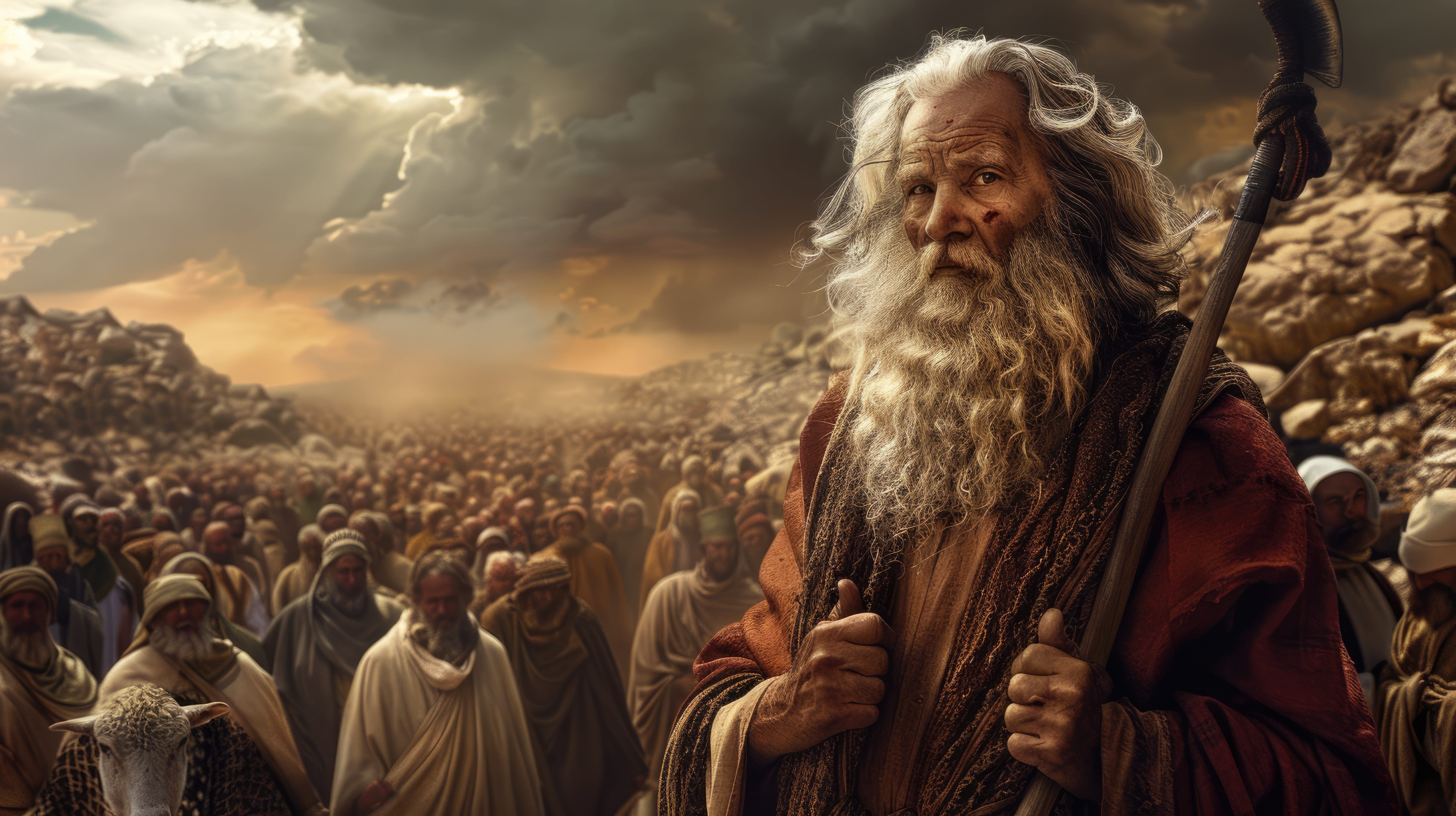
It’s dark in the camp. The spies came back yesterday. Ten of them talked about giants. Two talked about God. The people picked the ten, and now Moses is on his knees.
You probably know the prayer. “Please pardon the iniquity of this people, in keeping with the greatness of your faithful love.” He’s quoting God back to God. Exodus 34, the words God had spoken about Himself after the golden calf. Moses doesn’t argue Israel’s innocence. He can’t. He argues God’s character.
And God answers. Directly. Four words that should have made the whole camp weep with relief:
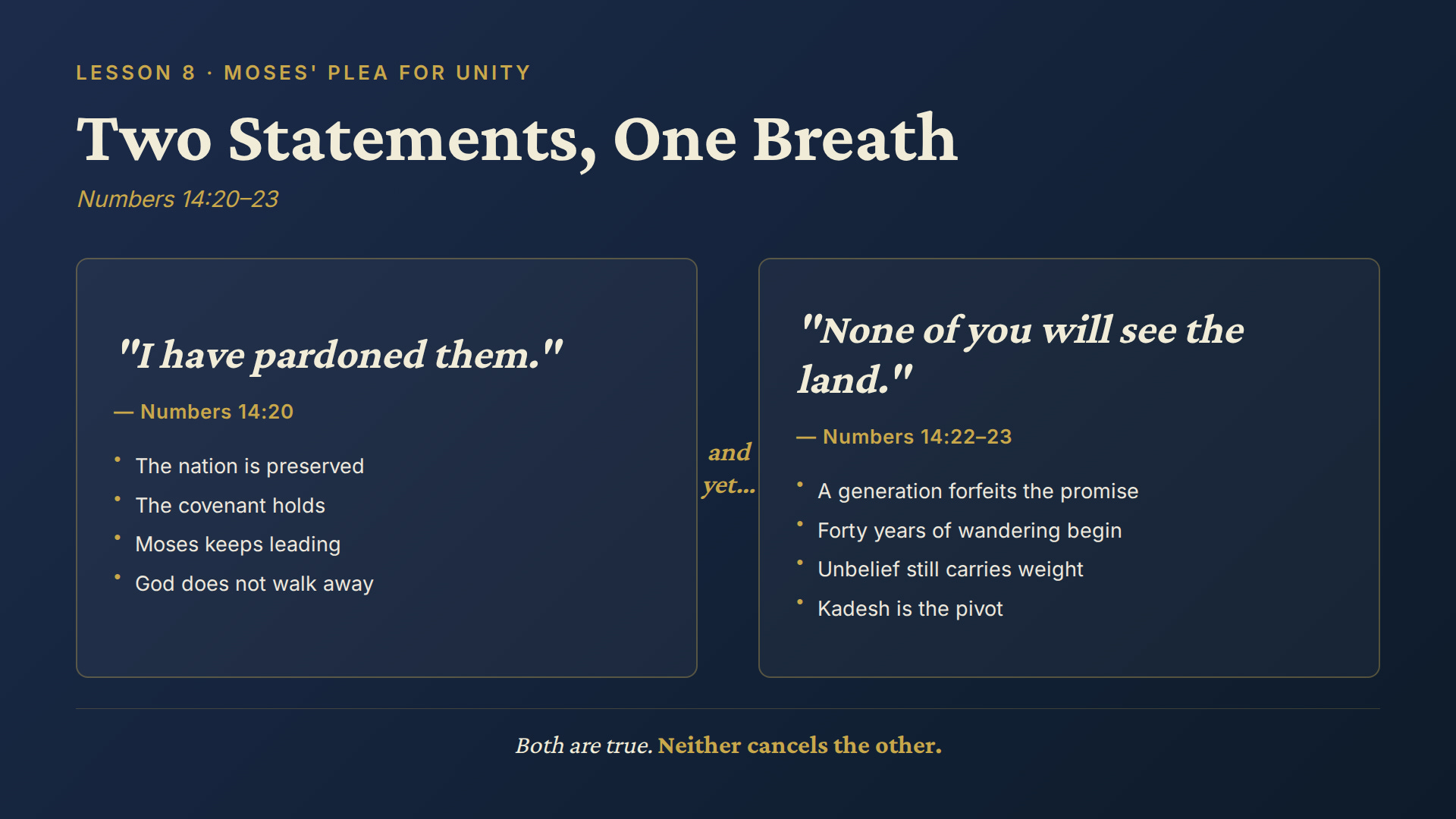
“I have pardoned them.” (Numbers 14:20)
If the chapter ended there, we’d have a clean story. Unity fractured. Leader prayed. God forgave. Nation moves forward.
But the chapter doesn’t end there.
In the very next breath (literally, the next sentence), God says something else. None of the men who have seen my glory and the signs I performed … will ever see the land I swore to give their ancestors.
Pardoned. And excluded. In the same answer. In the same moment.
That’s the sentence the rest of the wilderness is built on. Everything after Numbers 14 flows from it. The forty years of wandering. A whole generation dying in the desert. Kids burying their parents, one by one, in sand that was never supposed to be home.
What do we do with that?
We want one or the other
Here’s something I’ve noticed, teaching this stuff for a while. When we hear “God forgives,” we naturally want the forgiveness to do more than it does. We want pardon to mean the whole problem is gone. Clean slate, zero residue, move along. Anything less feels like God is secretly still holding it against us.
So we do one of two things.
Either we over-read the pardon. God said he forgave them, so the consequences must not really count as punishment. Let’s not make too much of them.
Or we over-read the consequences. If they really lost the land, how real was the forgiveness in the first place?
Numbers 14 won’t let us do either.
God pardoned them. That word isn’t decorative. The nation was preserved. The covenant held. The relationship continued. Moses kept leading. The cloud kept going. God did not walk away.
And the generation did not see the land.
Both. At once. Neither cancels the other.
What forgiveness actually does
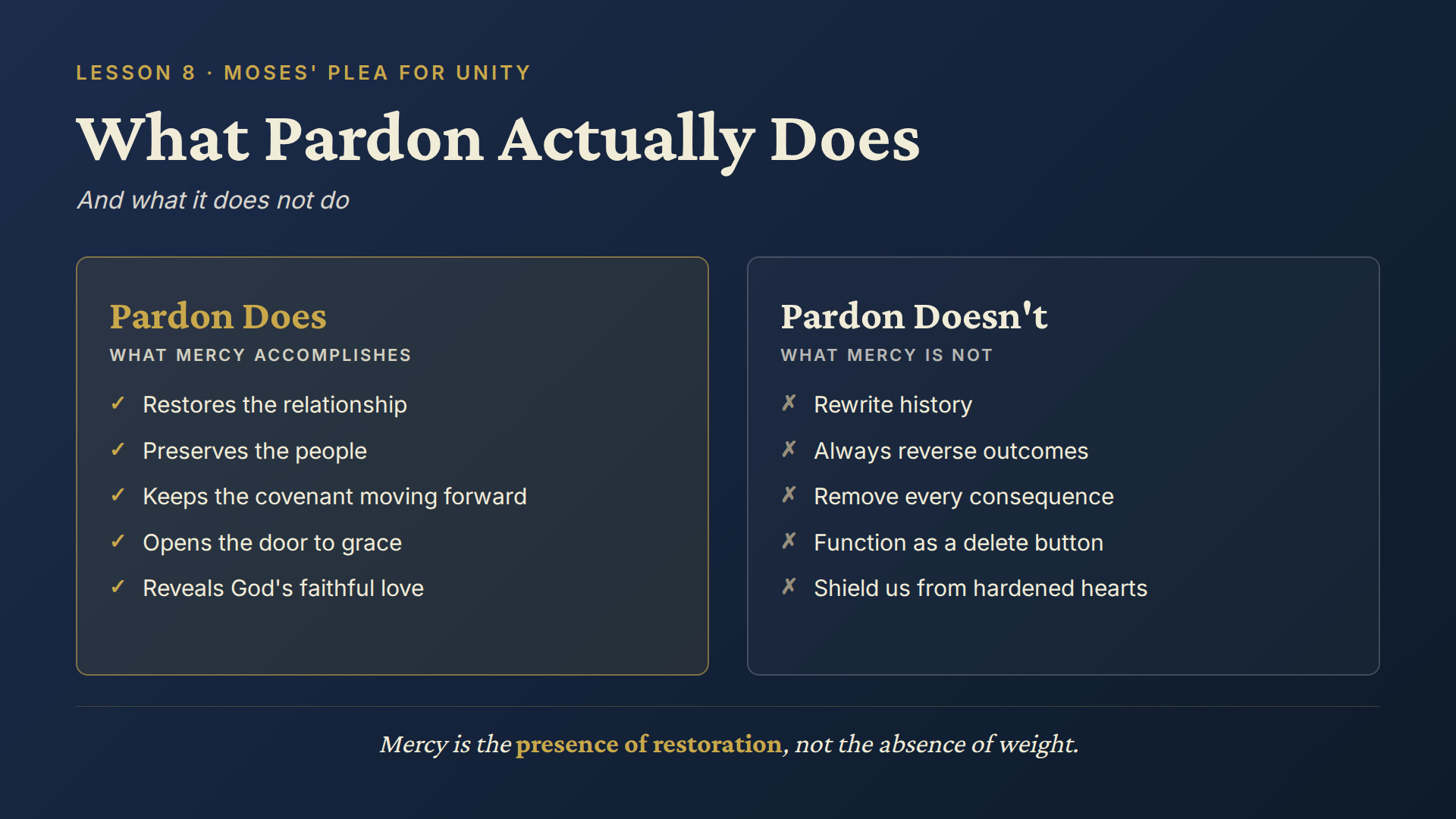
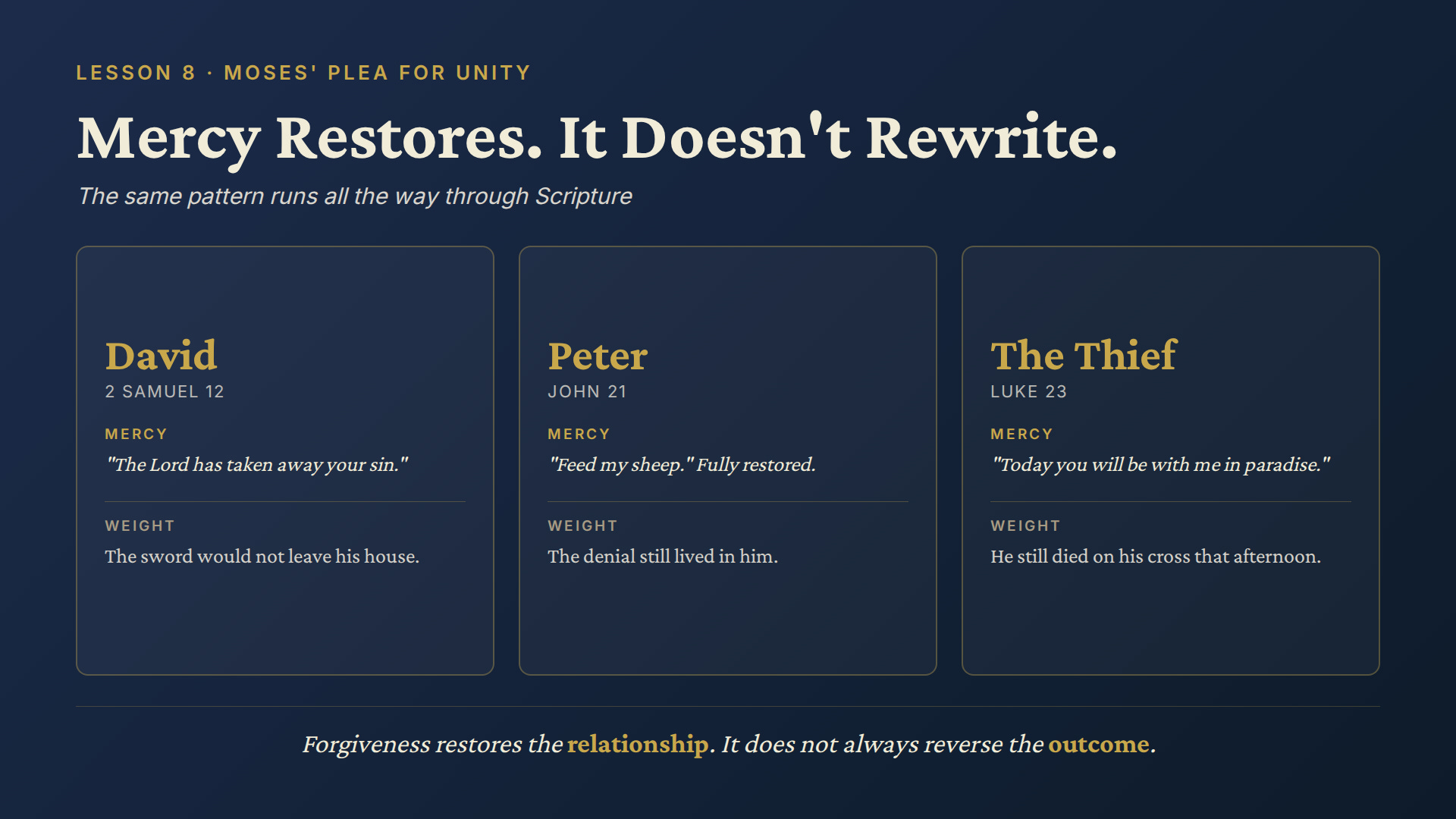
Think about it this way. Forgiveness restores a relationship. It doesn’t rewrite history, and it doesn’t always reverse outcomes.
If I lie to my wife and she forgives me, the lie still happened. The trust still has work to do. The relationship is restored (and that’s real, that’s the whole point), but the shape of what I did still lives in the room for a while.
This is the pattern all over Scripture. David is forgiven after Bathsheba, and the sword still doesn’t leave his house. Peter is restored after the denial, and the denial is still something Peter has to carry. The thief on the cross hears “today you will be with me in paradise,” and he still dies that afternoon.
God’s mercy is not a delete button. It’s something deeper, and honestly better. Mercy is the presence of restoration, not the absence of weight.
The part that should shake us
Here’s where this gets uncomfortable.
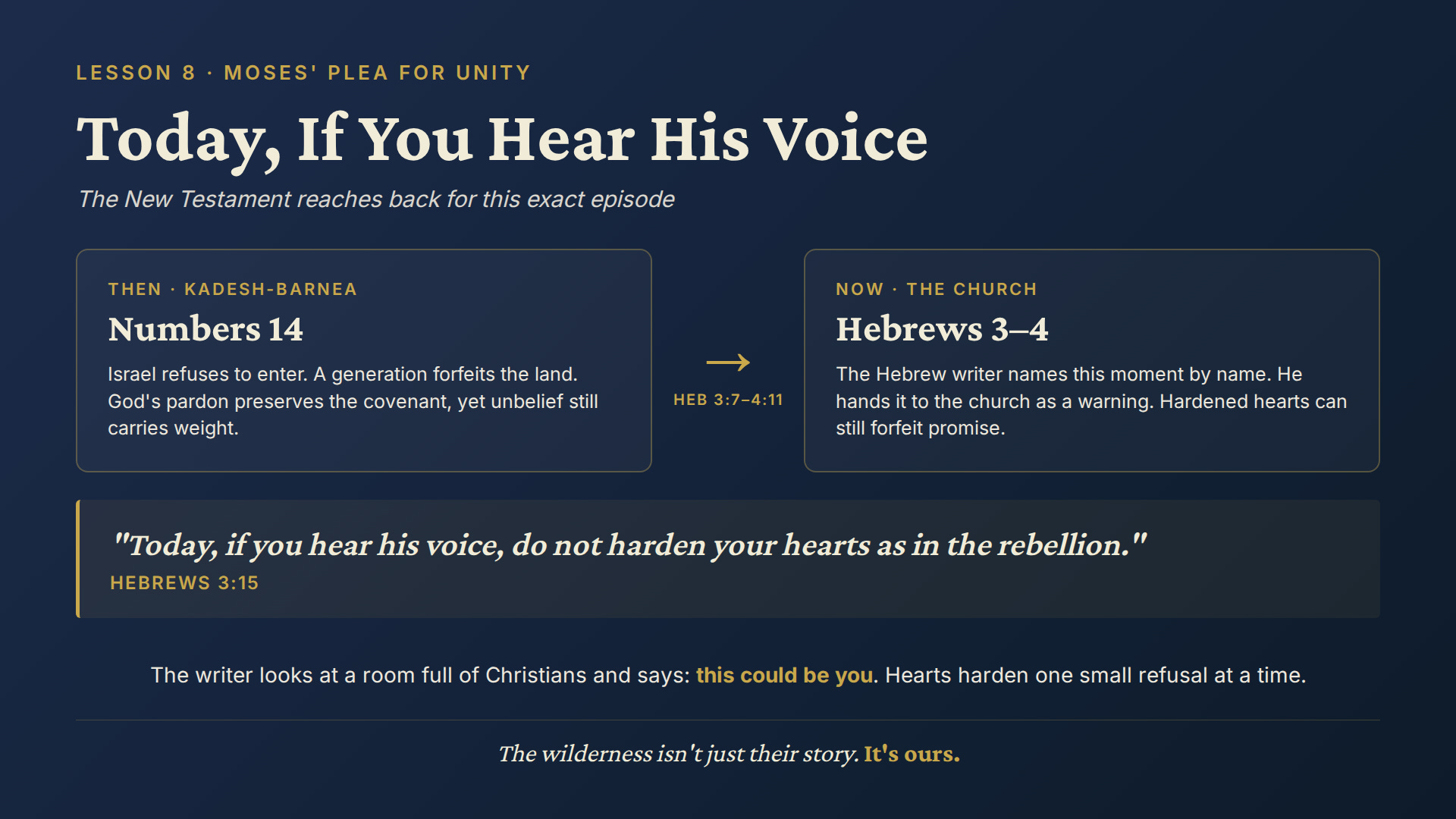
The New Testament doesn’t treat Numbers 14 like a quaint Old Testament footnote. Hebrews 3 and 4 reach all the way back to this specific episode, by name, and hand it to the church as a warning.
Today, if you hear his voice, do not harden your hearts as in the rebellion, on the day of testing in the wilderness, where your ancestors tested me, tried me, and saw my works for forty years. Therefore I was provoked to anger with that generation and said, “They always go astray in their hearts, and they have not known my ways.” So I swore in my anger, “They will not enter my rest.”
– Hebrews 3:7-11
Stop and think about what the Hebrew writer is doing. He’s looking at a room full of Christians (baptized, in the body, inside the covenant) and telling them this could be you. The generation that came out of Egypt was God’s people. Redeemed. Pardoned. Loved. And they forfeited the promise because their hearts went hard.
That isn’t a story about them. It’s a story about us.
The danger isn’t that God secretly stops forgiving. The danger is that we keep choosing unbelief until the shape of our lives can no longer hold what He wanted to give us. Not because He changed. Because we did.
Read Hebrews 3 slowly sometime. Count how many times the writer says today. He’s urgent for a reason. Hearts don’t harden in an instant. They harden one small refusal at a time, over years, until what used to soften us doesn’t anymore. Kadesh wasn’t the first bad night in the wilderness. It was the cumulative one. The night all the small unbeliefs finally added up.
The good news, and it’s genuinely good
Here’s the turn. Because this can’t end as a warning alone.
The same chapter that says “none of you will see the land” also preserves the people. Their children go in. Joshua and Caleb, the two who believed, lead the crossing. The covenant God spoke to Abraham lands in the ground that was promised. Mercy wasn’t a pretense. It did what mercy does. It kept God’s people as God’s people.
And the character Moses appealed to, slow to anger, abounding in faithful love, is the same character revealed fully in Christ. The God who pardoned at Kadesh is the God who forgives through the cross. Fully. Not partially. Not with a catch.
But we have to let forgiveness do what forgiveness actually does, not what we wish it did. Restoration, yes. A delete button, no. And the warning stands: hearts can still harden. Promises can still be forfeited. The wilderness still preaches.
So what does faith look like, standing at our own Kadesh today?
Not a performance. Not a bargain. Just a soft heart, a willingness to hear, and honest trust in the God who said both things at once. The God who is still, to this hour, slow to anger and abounding in faithful love.
Today, if you hear his voice.
