


“And let the peace of Christ rule in your hearts, since as members of one body you were called to peace. And be thankful.” — Colossians 3:15
We live in the loneliest era in human history. That’s not an exaggeration. That’s the data, and more importantly, that’s what I see in the eyes of people I engage with week after week. More connected than ever digitally. More isolated than ever actually. And sometimes, the church, if we’re honest, hasn’t always been the answer people hoped it would be.
But that doesn’t change what God designed it to be.
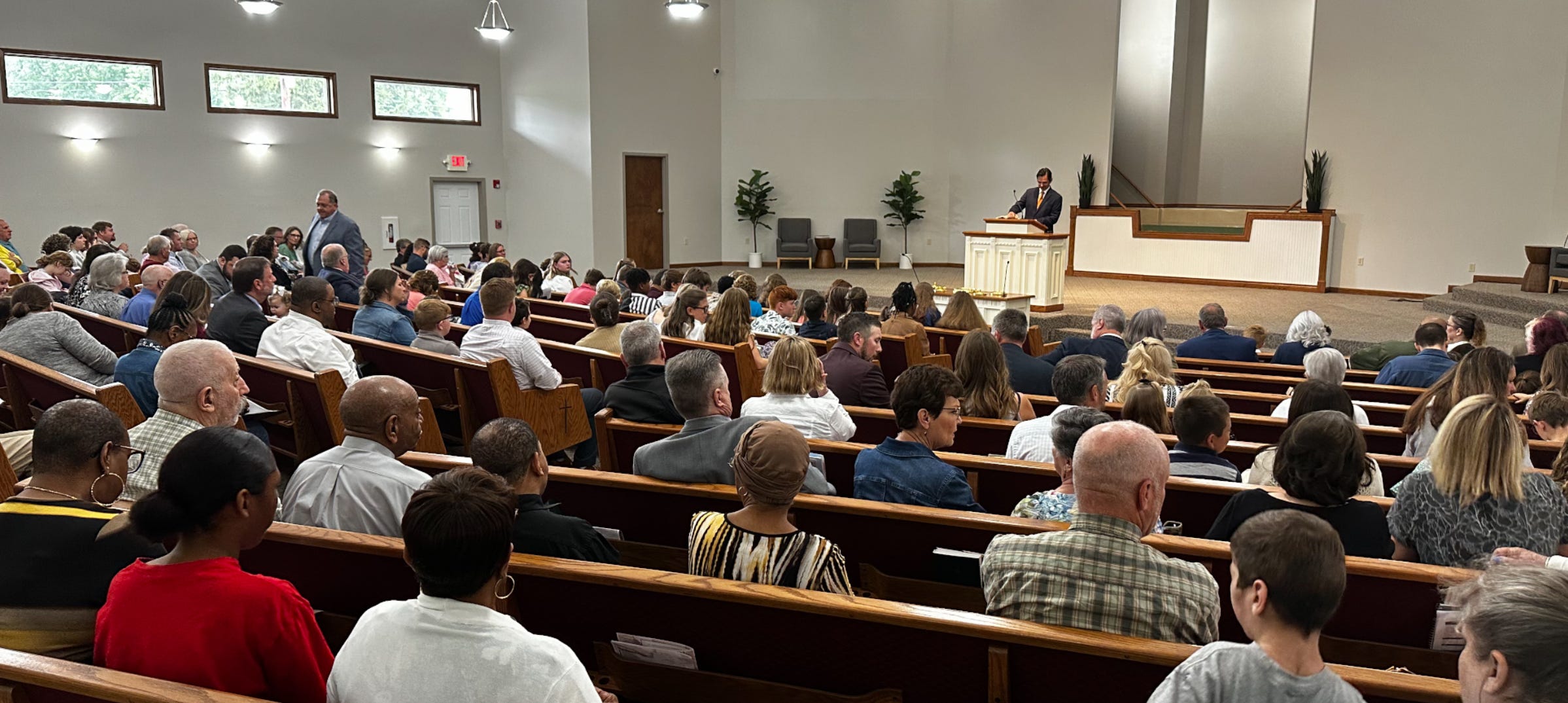
Paul’s vision of the church in Colossians 3 is staggering in its beauty. It’s not a religious club. It’s not a weekly program. It’s a body, living, breathing, interconnected, held together by the peace of Christ and marked by gratitude. And when it works the way God intended, there is nothing like it on earth.
That’s worth being thankful for.
The Peace You Couldn’t Manufacture
Before Paul ever gets to local church, he starts with something personal. “Let the peace of Christ rule in your hearts.”
The word “rule” here is brabeuō. It’s the word for an umpire or referee. Paul is saying let Christ’s peace be the deciding factor. When anxiety wants to call the play, let peace step in. When resentment is ready to make the call, let peace override it. When fear says one thing and faith says another, the peace of Christ is the arbitrator.
So, how does this matter for fellowship? Well, you can’t have genuine togetherness without it. People who haven’t settled the inner war bring that war into every relationship. They misread intentions. They carry offenses. They react instead of respond. Real fellowship, the kind worth being grateful for, requires people who have let Christ settle the battle on the inside first.
Romans 5:1 says: Since we have been justified by faith, we have peace with God through our Lord Jesus Christ. That’s the foundation. The faith Paul describes here isn’t passive. It’s the obedient faith that responds to the gospel, turns from sin, confesses Christ, and is buried with Him in baptism (Acts 2:38; Romans 6:3–4). That obedient faith is where peace with God is established. You’re no longer an enemy of God. The hostility has been dealt with. And from that peace, peace with God, flows the possibility of genuine peace with each other.
That’s not a small thing. That’s where all real closeness begins.
You Weren’t Meant to Walk Alone
The isolated Christian is a vulnerable Christian.
Look at Colossians 3:15 again. As members of one body you were called to peace. The body language is deliberate. Paul keeps coming back to it throughout his letters because he wants us to feel the weight of it. A hand isn’t useful on its own. A foot doesn’t go anywhere disconnected from the leg. The eye isn’t seeing anything separated from the head. The parts need each other, not as a nice idea, but as a structural reality.
Ecclesiastes 4:9–12 says: two are better than one. If one falls, the other can help him up. But woe to the one who falls with no one there to lift him. That proverb is thousands of years old and it’s still true at nine o’clock on a Tuesday morning when your life is falling apart.
Hebrews 10:24–25 tells us not to neglect gathering together, and the reason isn’t attendance for its own sake. It’s because we stir each other up toward love and good works. We need each other to stay sharp. We need each other to stay accountable. We need each other to stay honest.
What happens to people who disconnect from the local church? I’ve seen it more times than I can count. The drift is slow. They’d never call it that. But faith that isn’t being fed by others in the body doesn’t stay where it was — it shrinks. The enemy is patient, and isolation is one of his most effective tools.
The Gift of Being Known
There’s something specifically precious about being known by a group of people who are walking the same direction you are.
Not just acquaintances. Not just people who recognize your face on Sunday morning. People who know your name, know your story, notice when you’re off, and show up anyway. That kind of fellowship is increasingly rare in the world. But it’s supposed to be the norm in the church.
Galatians 6:2 says bear one another’s burdens, and so fulfill the law of Christ. The word for “burdens” there (baros) means a heavy weight — something too much for one person to carry alone. Paul isn’t talking about minor inconveniences. He’s talking about the real weight of life. Grief. Failure. Fear. Temptation. The stuff you don’t post about.
And 1 Thessalonians 5:11 gets practical: encourage one another and build each other up, just as you are already doing. Paul says it’s already happening in that congregation — keep doing it. Don’t let it stop. Don’t let busyness crowd it out. Don’t let church become a transaction instead of a community.
One of the moments in a person’s spiritual life that leads to the greatest transformation is often not a sermon. It’s a phone call from someone who just knew they needed to check in. It’s a meal that shows up at the door. It’s somebody sitting in the hospital waiting room who didn’t have to be there but came anyway. That’s fellowship doing what God designed it to do.
And Be Thankful
Paul closes verse 15 with three words that hit like a punctuation mark. And be thankful.
Not “and try to appreciate it.” Not “and notice it when it’s convenient.” Just: be thankful. It’s imperative language. A command wrapped in a gift.
The truth is that we can sit inside the gift of a local church family and still take it for granted. We can grow so accustomed to a congregation of people who love us and pray for us and show up for us that we stop seeing what we have. We start cataloguing the ways the church has let us down instead of remembering the ways it has carried us.
Romans 1:21 is a warning worth heeding. Ingratitude, Paul says, is where the downward spiral begins. When we know God and don’t honor Him as God, when we don’t give thanks, darkness sets in. Gratitude isn’t just a nice virtue. It’s a spiritual protection.
So today, think about someone in your church family who has meant something to you. A teacher. A friend. A person who prayed over you when things were hard. An elder who saw something in you before you saw it in yourself.
And thank God for them. Maybe even thank them directly. You’d be surprised what a word of genuine gratitude can do for another soul.
The Church Is Worth Fighting For
I know things any local church aren’t perfect. We shouldn’t pretend otherwise. People disappoint us. Congregations go through hard seasons. Leadership makes mistakes. None of that changes the fact that this is God’s design: a family, a body, a community of people who have been called together by the same grace to live out the same faith. That is what the church is: God’s called out body.
That’s remarkable. It’s worth protecting. And it starts by being genuinely, openly, unashamedly thankful for it.
Let the peace of Christ rule. Live as one body. And be thankful.
Tomorrow: we’ll explore why the opportunities God gives us to serve are themselves a reason for deep gratitude.
