


I am worn down by the division in our country.
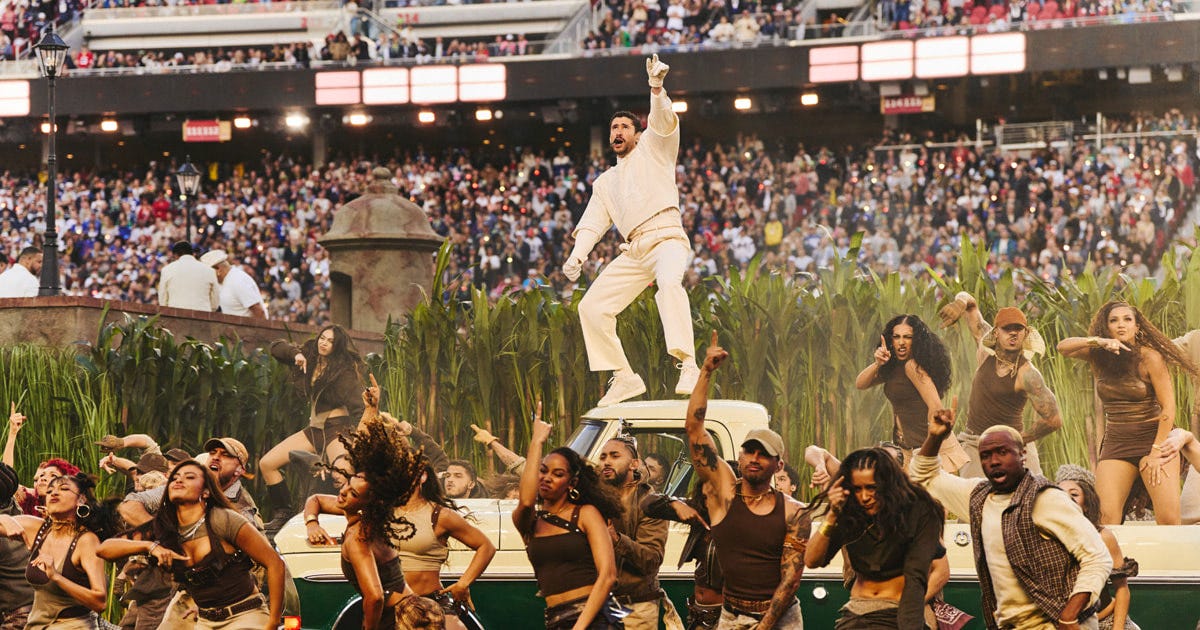
This week, it is a halftime show.
Not a war. Not a crisis. A halftime show.
This morning, my feed is filled with virtue signaling, accusations, and arguments over which show people watched. Charges of hypocrisy are flying around. One show is being praised over the other. Judgments are being made.
Really?
I have my own thoughts about the halftime show. But they don’t matter. They are opinions. Now we know in part (1 Corinthians 13:9). People I love are coming down on different sides. I still love them. That should not be complicated.
I didn’t watch either halftime show. It has never been a big deal for me. And they always push the limits of decency and almost always sanction ungodly lifestyles and practices. So, I usually turn it off anyway.
What troubles me is not the show. It’s what we are becoming.
We now feel the need to plant our flag of identity over everything. Entertainment. News clips. Political posts. Cultural moments. Every opinion becomes a test. Every silence becomes suspicious. Every disagreement becomes personal.
Can we hear ourselves?
The same pattern showed up with a video the President posted on Friday. I have an opinion about it. But I also know this: posting it would not change a single mind. A fool gives full vent to his anger, but a wise person holds it in check (Proverbs 29:11). If I revealed my opinion, it would only make some people angry, and others applaud. And depending on who reads it and what media they consume, they would immediately decide who I am - even though they don’t know who I am.
We need to remember that most online arguments don’t persuade. They polarize. Avoid foolish and ignorant disputes, knowing that they breed quarrels (2 Timothy 2:23). They don’t clarify. They categorize. And in the church, this is especially dangerous.
What is this doing to us?
We are learning to speak like the world speaks. We are reacting instead of reflecting. We are assuming the worst instead of bearing with one another. Yet James says, Let every person be quick to listen, slow to speak, slow to anger (James 1:19).
We are confusing conviction with combativeness. But the Lord’s servant must not quarrel, but must be gentle to everyone (2 Timothy 2:24).
God calls us to something better.
Bear with one another and forgive one another… above all, put on love (Colossians 3:13–14).
If possible, as far as it depends on you, live at peace with everyone (Romans 12:18).
Maintain the unity of the Spirit in the bond of peace (Ephesians 4:3).
We also need to acknowledge reality. There are forces much larger than us, with unlimited resources, shaping fear and outrage through every imaginable form of media. Scripture reminds us that our struggle is not against flesh and blood (Ephesians 6:12). Not every post is neutral. Not every outrage is organic. Not everything that demands a reaction deserves one.
And there are things we simply cannot change. “You do not know what tomorrow will bring (James 4:14). But we can choose how we respond.
So where do we go from here?
We stop attaching our identity to politics and cultural battles. Our citizenship is in heaven (Philippians 3:20).
We refuse to make every issue a loyalty test. Accept one another, just as Christ accepted you (Romans 15:7).
We remember that silence can be wisdom, not weakness. Even a fool is considered wise when he keeps silent (Proverbs 17:28).
And we choose faith over fear. God has not given us a spirit of fear, but one of power, love, and sound judgment (2 Timothy 1:7).
The church does not need to be louder right now. It needs to be steadier. Let your graciousness be known to everyone. The Lord is near (Philippians 4:5).
That’s how we move forward.

Excellent words, sir. Our cultural battles have made us quick to speak and quick to become angry.
It is not that we shouldn't speak up in response to our culture, but when we do, we must be careful and intentional. We don't need to respond to everything, and when we do we need to be speaking with gentleness and truth, not self-righteousness and partialty.
Philippians 4:1-9 has a lot to say about this, but I'll just pull from verse 5: "Let your reasonableness be known to everyone."
Propositional beliefs alone even when they result in behavior modification under duress do not rock the world. Genuine faith in Christ changes the world one person at a time.