


I’ve been talking about it quite a bit lately. The topic has come up with our elders and one of our deacons, with whom I co-host a weekly webcast. The topic: the amount of pain and brokenness our fellow Christians are carrying. It is everywhere, if you take the time to look.
People are carrying grief that hasn’t found words yet. They are walking through strained marriages, family tension, and relationships that feel permanently fractured. Some are dealing with chronic illness, declining health, or bodies that no longer cooperate the way they once did. Others are worn down by financial pressure, job uncertainty, or the constant weight of trying to hold everything together.
Many are battling quiet discouragement. They feel spiritually dry, unsure why joy has faded or why prayer feels harder than it used to. Some carry deep regret over past choices. Others are exhausted from caregiving, parenting, or simply trying to stay faithful in a world that feels increasingly hostile to faith.
There are wounds from church conflict, leadership failures, and long seasons of unmet expectations. There is loneliness; sometimes even in a room full of people. There is fear about the future, anxiety over children and grandchildren, and a sense that life did not turn out the way they had hoped.
And much of this pain remains hidden. Smiles stay in place. Sunday routines continue. But underneath, many are holding together lives that feel fragile and worn.
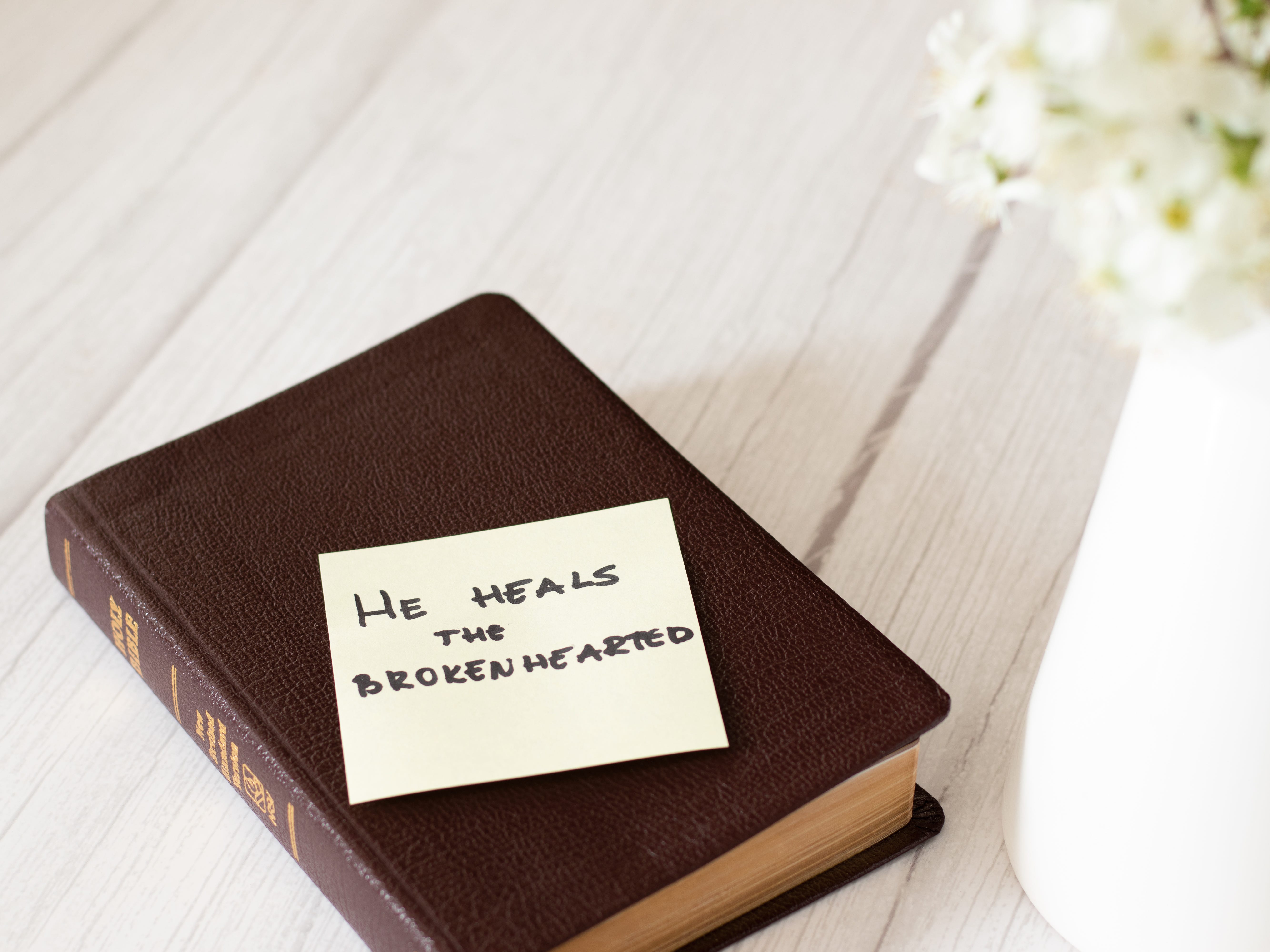
What makes this kind of brokenness even harder is that many expect healing to be quick. We pray. We ask God to intervene. We hope for relief. And when change does not come right away, it’s easy to assume something has gone wrong, either with God or with us. But Scripture shows us something different. “He heals the brokenhearted and binds up their wounds” (Psalm 147:3), and that work is often careful and ongoing. God frequently restores and rebuilds over time, not in a single moment but through steady, patient care. While that can be frustrating, it is also deeply reassuring. God is not absent in the slow process. He is present in it, strengthening what has been weakened and rebuilding what has been damaged.
Most of us want healing to be quick.
When we’ve been wounded, we want relief. When something is broken, we want it fixed. And when life has worn us down, we want restoration to come fast and clean. But Scripture shows us that God often rebuilds slowly and deliberately.
That slowness is not neglect. It is care.
Isaiah paints a hopeful picture of restoration when he writes,
The Lord will always lead you, satisfy you in a parched land, and strengthen your bones. You will be like a watered garden, like a spring whose water never runs dry.
(Isaiah 58:11)
Notice the language. God leads. God satisfies. God strengthens. This is not rushed work. It is steady, intentional care over time.
God heals, but He also rebuilds
Healing and rebuilding are not always the same thing. Healing addresses the wound. Rebuilding restores what life around the wound damaged.
Looking again at Psalm 147:3, God does not ignore pain. He tends to it personally. But Scripture also shows that after wounds are bound, God continues His work: reshaping hearts, renewing faith, and rebuilding lives.
Isaiah continues,
Some of you will rebuild the ancient ruins; you will restore the foundations laid long ago; you will be called the repairer of broken walls, the restorer of streets where people live (Isaiah 58:12).
Rebuilding takes time. Foundations are not restored overnight. Walls are raised stone by stone. God works patiently because what He builds is meant to last.
Why God’s restoration is often slow
Slow rebuilding teaches us dependence. It keeps us close to God. When restoration comes gradually, we learn to listen, wait, and trust.
Paul reminds us that our inner person is being renewed day by day (2 Corinthians 4:16). Renewal is daily, not instant. God is more interested in depth than speed. Quick fixes can leave weak foundations. Slow restoration strengthens what matters most.
And often, God uses the process itself to reshape us. Patience grows. Compassion deepens. Faith matures. We become gentler with others because we know what it is to need grace.
God rebuilds with purpose, not pressure
When God rebuilds, He does not rush us or shame us. He leads. He provides. He restores at the pace our hearts can bear.
David understood this when he prayed, the Lord will fulfill his purpose for me (Psalm 138:8). God finishes what He begins, but He does so with wisdom and care.
Slow restoration is not wasted time. It is preparation. Often, God is not just restoring us for our own sake, but equipping us to help restore others.
Those who have been rebuilt gently often become the safest people to stand beside the broken.
A word for those still in the process
If you feel like progress is slow, don’t assume God is absent. He may be doing His deepest work.
If you are frustrated by how long healing takes, remember that God is rebuilding more than circumstances; He is strengthening your soul.
Isaiah says those rebuilt by God will become places of life for others. That kind of restoration cannot be rushed.
So trust the process. Stay faithful in small steps. Let God do His careful work. The one who calls you is faithful, and he will do it (1 Thessalonians 5:24). God is not finished with you. He is rebuilding. And what He restores, He restores to endure.
