


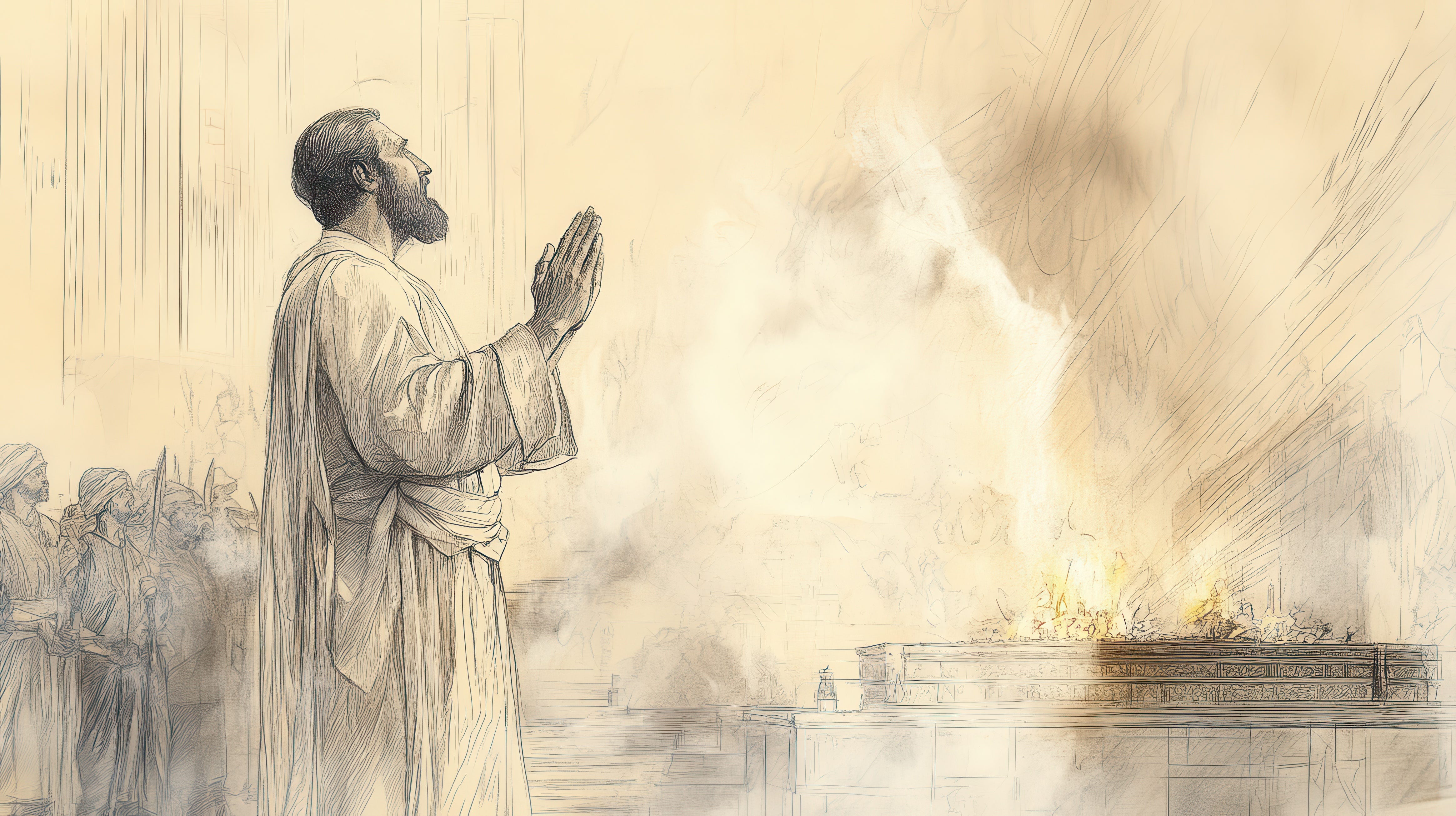
Sometimes decline does not happen loudly. It happens gradually.
That was the case in Judah before Hezekiah became king. His father, Ahaz, had shut the doors of the Lord’s temple. Worship had been neglected. The altar was cold. The lamps had gone out. What once was central had been pushed aside.
2 Chronicles 29 says, They abandoned him and turned their faces away from the Lord’s dwelling place (v. 6).
Spiritual drift rarely announces itself. It just slowly shifts priorities. Then Hezekiah took the throne.
He started with what had been closed
In the first year of his reign, in the first month, Hezekiah reopened the doors of the temple and repaired them (2 Chronicles 29:3). See that he didn’t start with military reform or forming political alliances. He started with worship.
He called the priests and Levites together and said, Consecrate yourselves now and consecrate the temple of the Lord (v. 5). Before anything else, the house of God had to be cleansed.
Restoration begins with honesty
Hezekiah did not pretend things were fine. He acknowledged what had happened: Our fathers were unfaithful and did what was evil in the sight of the Lord (v. 6). Restoration never begins with denial. It begins with confession.
The priests went inside and carried out the impurities. The text says it took sixteen days to complete the cleansing (v. 17). It was not instant. It was deliberate work. Spiritual renewal often requires patient removal of what has quietly accumulated.
When worship returns, joy follows
Once the temple was restored, the sacrifices resumed. Songs were sung again. The instruments played. And something beautiful happened. Then Hezekiah and all the people rejoiced over how God had prepared the people, for the event took place suddenly (2 Chronicles 29:36).
Notice that phrase: God prepared the people.
Hezekiah reopened the doors. The priests cleansed the temple. But God prepared hearts. Real renewal is never manufactured. It is a work of God among people willing to return.
Why This Matters Now
Last night I watched parts of the State of the Union address. The division in our nation was not subtle, it was glaring. At one point, a young woman was recognized who had been pulled into the confusion of transgender ideology, exploited, trafficked, and deeply wounded. She has since been rescued, returned home, and is rebuilding her life, turning her focus back to the Lord.
That should not be controversial. A young woman rescued from exploitation should unite a room. Restoration should move us. Deliverance should draw gratitude.
And yet, the response revealed just how fractured we have become.
When a culture cannot clearly condemn exploitation, cannot clearly celebrate rescue, and cannot rejoice in a life being restored, we are not merely politically divided, we are spiritually disoriented. This is what moral confusion looks like. It blurs compassion. It distorts truth. It clouds what should be obvious.
And that confusion does not stay on a national stage. It filters down into homes. It shapes classrooms. It pressures churches. It weighs on parents. It leaves young people uncertain and vulnerable.
The noise is constant. The messaging is relentless. And the spiritual consequences are real. Isaiah warned that there are times when people “call evil good and good evil” (Isaiah 5:20). When that happens, clarity fades and hearts grow tired. This is not simply a political problem. It is a spiritual one.
And spiritual problems require spiritual renewal. That is why Hezekiah’s story is so imporant. The answer was not louder rhetoric. It was not despair. It was not retreat. It was reopening the temple. Renewal began when what had been closed to God was opened again. And that is still where renewal begins.
A word for today
You may not control the culture. You may not control every circumstance. But you can open the doors of your own heart again.
Consecrate yourself.
Remove what does not belong.
Return to worship.
Psalm 51:12 says, Restore the joy of your salvation to me.
God delights to answer that prayer. When the temple doors reopen, whether in a nation, a church, or a single heart, God meets His people there.
And what has grown cold can burn again.
