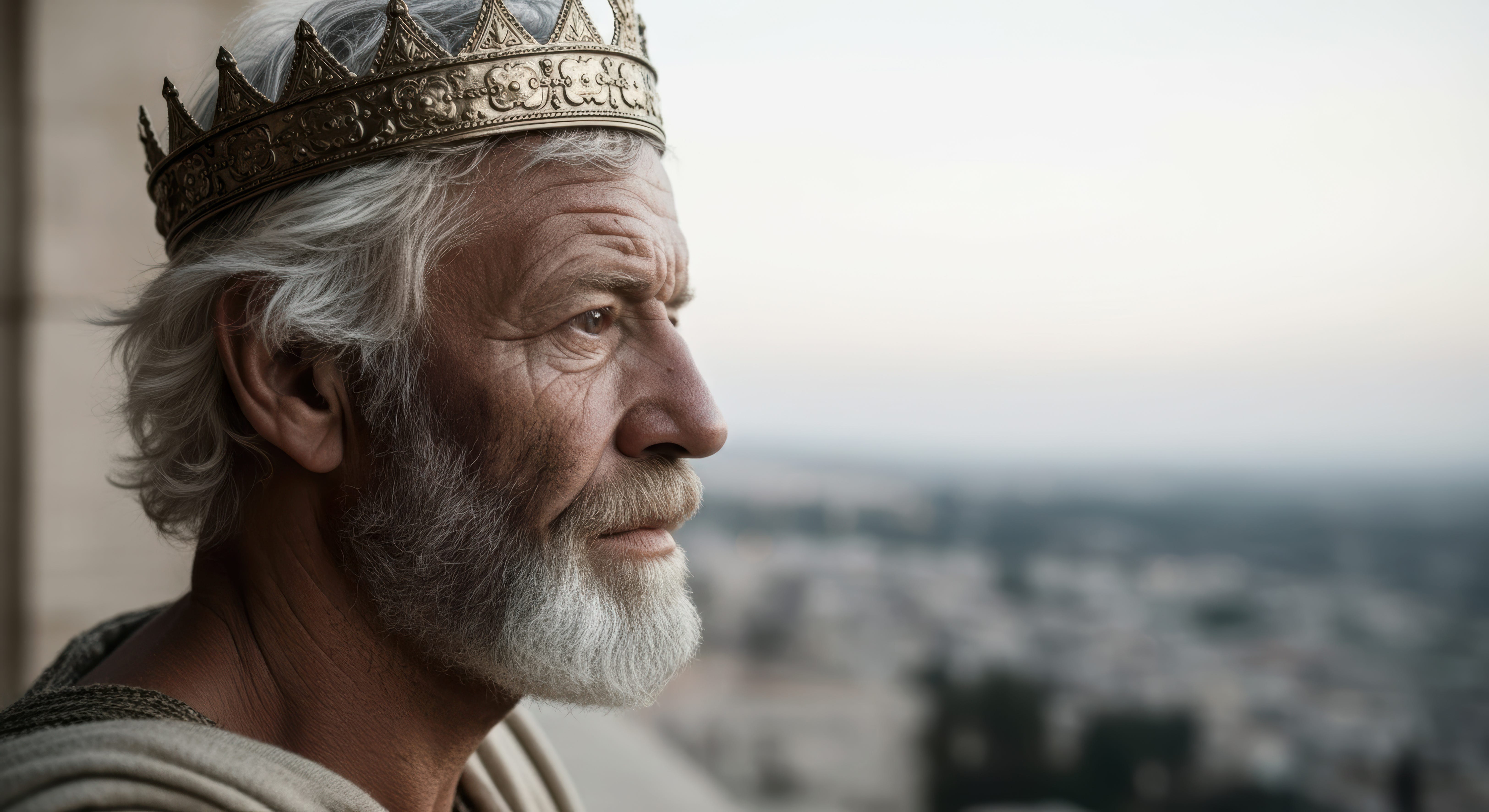
For the last six months, I’ve been teaching a Tuesday morning class in 2 Samuel. We’re nearing the end, and in a few weeks, we will be going through David’s final words that are recorded in the first 7 verses of chapter 23. David has been reigning as king for 40 years. He knows the end of his life is in sight, and he begins to look like over his life.
He’s looking not just at what he’s done, but at who he’s been. The decisions. The moments he handled well… and the ones he didn’t.
And what he says is striking.
“Is it not true my house is with God?
For he has established a permanent covenant with me,
ordered and secured in every detail…” (2 Samuel 23:5)
He’s not pretending his life was flawless. He knows better than that. He remembers the failures. The regret. The consequences didn’t just affect him, but others, too. And yet… he speaks with confidence.
Not in himself.
In God.
That’s the difference.
A Different Kind of Confidence
Most of us default to one of two places. Either we look back and feel proud… or we look back and feel defeated. David does neither. He doesn’t say, “I got it right.” He says, “God has been faithful.” That’s a completely different foundation.
Because if confidence is built on performance, it’s always fragile. There’s always something that unsettles it. Something we wish we could redo. Something that keeps us from resting. But David anchors himself somewhere else entirely.
God made a covenant. God established it. God secured it. And David trusts that.
That same confidence shows up again in the New Testament:
“He who started a good work in you will carry it on to completion until the day of Christ Jesus.” (Philippians 1:6)
What God starts, He finishes.
What God Builds, Holds
Listen to how he describes it:
Permanent — this isn’t temporary or uncertain
Ordered — this isn’t chaotic or accidental
Secure — this isn’t hanging by a thread
That’s not how most of us describe our lives. But that’s exactly how David describes what God has done. And it gives him peace. Not because everything in his life turned out the way he wanted, but because he knows God is still holding it together.
Paul shared that same security:
“There is therefore now no condemnation for those in Christ Jesus.” (Romans 8:1)
And just a few verses later:
“If God is for us, who is against us?” (Romans 8:31)
That’s the kind of stability David is resting in.
Facing the End Without Pretending
What David says next is deeply personal:
“Will he not bring about my whole salvation and my every desire?”
That’s not wishful thinking. That’s trust. He believes God will finish what He started. And that’s a powerful place to stand, especially at the end of a long, complicated life. There is no pretending or rewriting the story. He doesn’t try to justify everything. He simply rests in the faithfulness of God.
That same confidence is expressed again:
“Now to him who is able to protect you from stumbling and to make you stand in the presence of his glory, without blemish and with great joy…” (Jude 24)
God doesn’t just begin the work … He brings it to completion.
Bigger Than Your Worst Moments
There’s something here we need to hear. This kind of confidence doesn’t excuse sin. David never minimizes what he did. But it does remind us of something greater: God’s work is bigger than our worst moments. If everything depends on us, we’re in trouble. But if it rests on God—His promise, His purpose, His faithfulness—then there is stability we could never create on our own.
Paul says:
“Where sin multiplied, grace multiplied even more.” (Romans 5:20)
That doesn’t make sin small—but it does show how great God’s grace really is.
That’s not arrogance. It’s trust.
Where This Leaves Us
So here’s the question.
When you think about your life, right now, where is your confidence coming from?
Your track record? Your consistency? Your ability to hold it all together? Or God?
Because only one of those will actually hold. And Scripture keeps pointing us back to the same conclusion:
“Let the one who boasts, boast in the Lord.” (1 Corinthians 1:31)
And David, after everything he’s lived through, makes it clear: real stability doesn’t come from a flawless life—it comes from a faithful God.